State of AI Monetization 2026

RESEARCH · THE 2026 SERIES · ACT I · FREE DOWNLOAD
State of AI
Monetization 2026
AI made every prompt a commercial event. Pricing changed more in twelve months than in the previous twelve years. The report maps the new terrain — what broke, who is closing the gap, and where the next phase of monetization is being won.
No registration. No email. Just the report
The Year Pricing Broke
8%
Extremely confident in true
AI cost-to-serve
47%
Say forecasting is the biggest
near-term challenge
57%
Say billing complexity has
increased
9%
Believe nothing needs to change before scaling
AI monetization:
In 2025 it became inevitable.
In 2026 it became difficult.
Three sentences a CFO can paste into a board pre-read. Everything else proves it.
01
The strategic argument has been won.
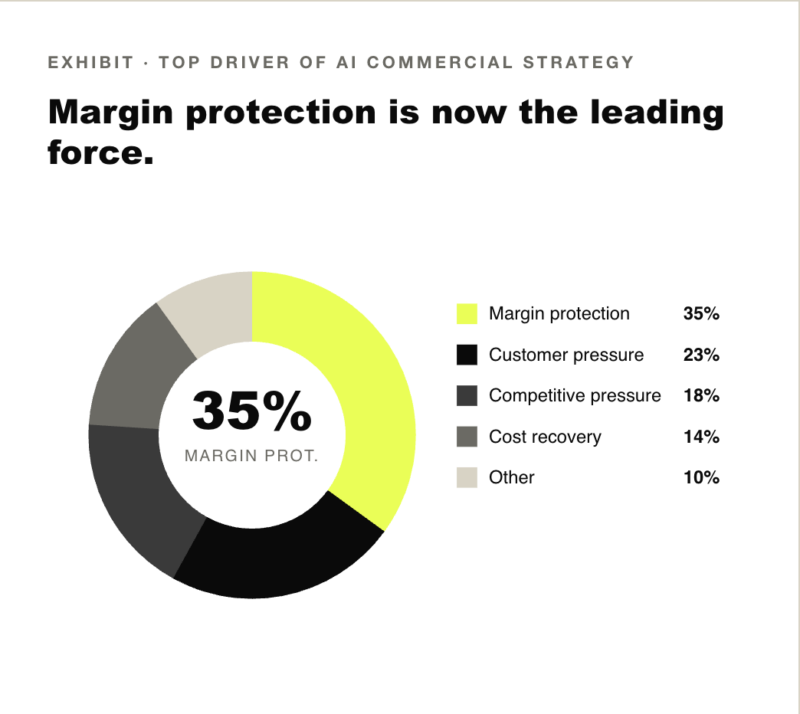
Margin protection is now the leading driver of AI commercial strategy (35%). Customer pressure no longer leads — economics do.
02
The market is acting before it is aligned.
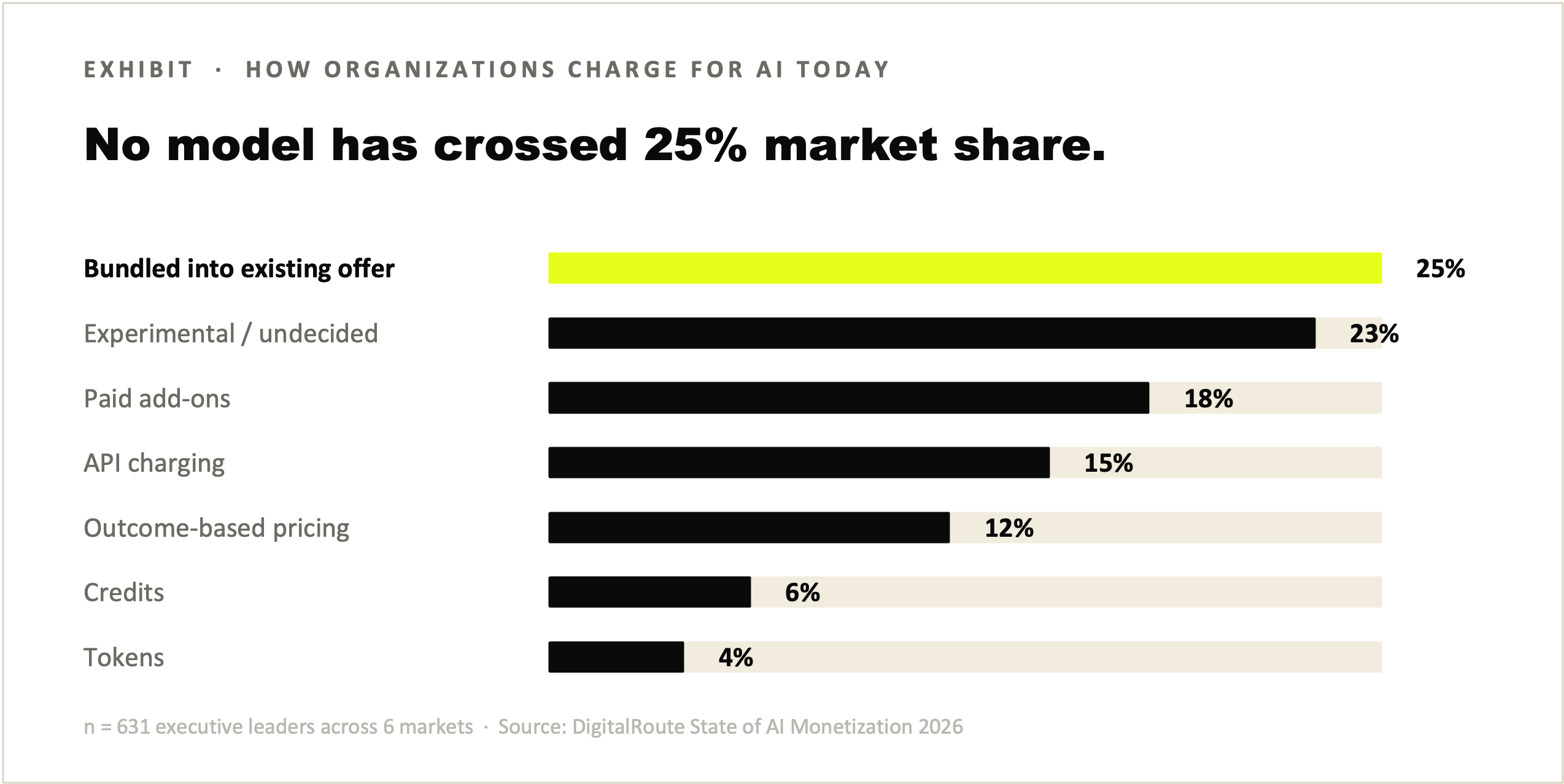
Bundling leads at 25%, but 23% are still experimental, 18% paid add-ons, 15% API charging, 12% outcome-based. No dominant model has emerged.
03
Foundations are still incomplete.
45% need a better data foundation. 43% need scalable infrastructure. Only 9% say nothing needs to change before they scale.

Eight numbers from inside
Pulled from 631 respondents across six markets.
01
35%
Rank margin protection the top driver of AI commercial strategy
01
47%
Name forecasting usage and revenue as a top-three challenge
01
47%
Say real-time usage data is highly critical to monetization
01
40%
Say infrastructure breaks first when AI usage scales
01
8%
Extremely confident in true cost-to-serve of AI features
01
23%
Describe AI forecasting accuracy as high — only this many
01
57%
Say billing complexity has increased — 7% say it decreased
01
67%
Place AI decision rights with finance or engineering
One chart that earns the click.
Sample exhibit from the report. The pricing model market — fragmented, with no dominant winner.
The market is not short of monetization ideas. It is short of convergence
Bundling leads at 25%, but with 23% still experimental and four other models in active use, no dominant pricing grammar has emerged. Categories scale faster when buyers and sellers share a vocabulary. AI does not yet.
— Chapter 2
Margin leads. Infrastructure cracks.
Two charts that together set the frame of the year. What is driving commercial strategy — and where the strain shows up first.
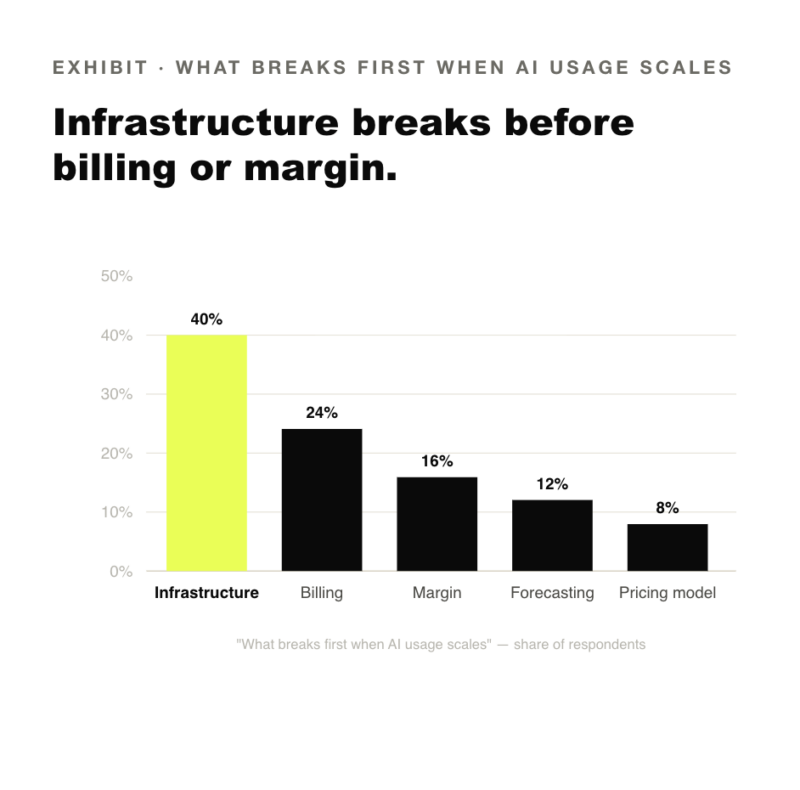
See what breaks when AI usage scales
The report connects the commercial pressure with the operational reality behind it:
pricing models, cost-to-serve, forecasting, billing complexity, governance, and infrastructure readiness.
PDF · Open access · No registration
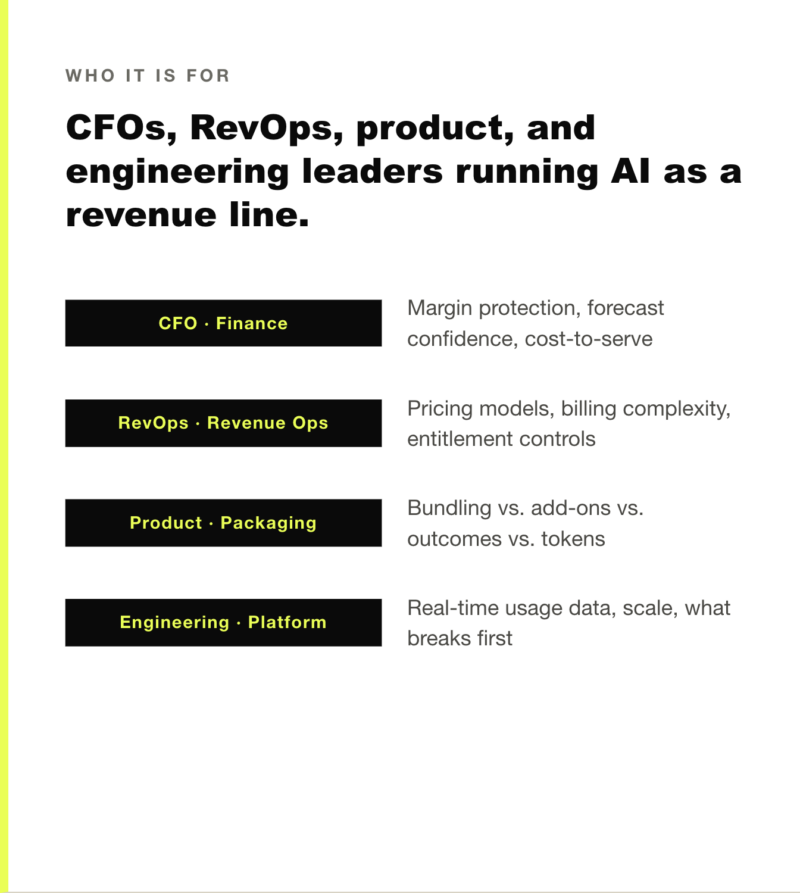
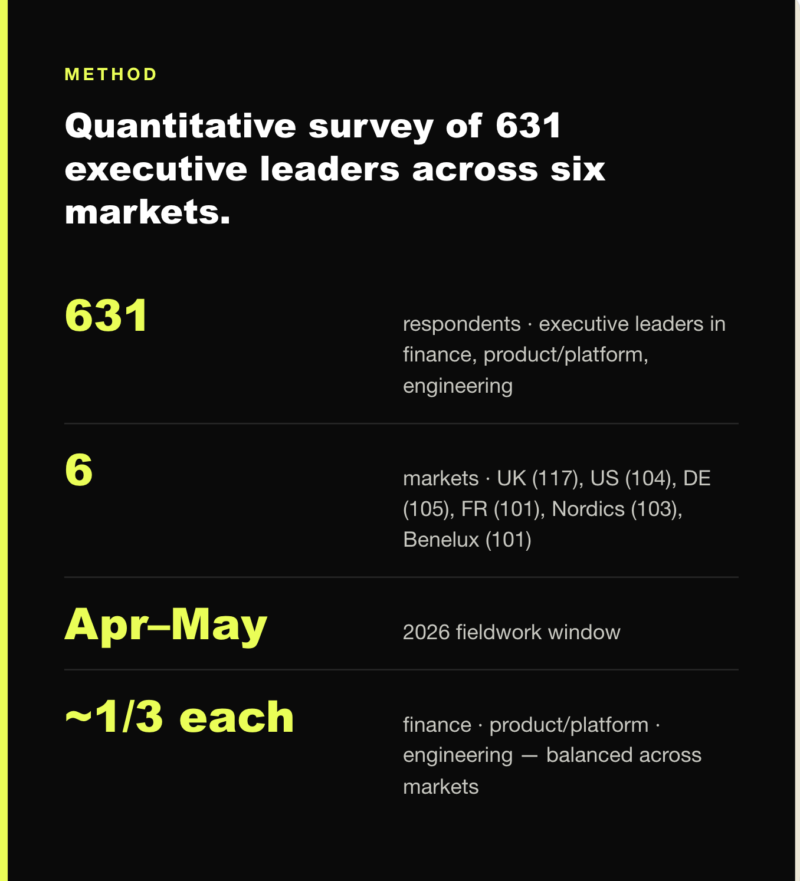
Who should read it. How we ran the study
Audience tags declare relevance up front.
Methodology is named, not hidden behind a download form.

” In 2025, AI monetization became strategically inevitable.
In 2026, it became commercially difficult.”
— State of AI Monetization 2026 · Executive Summary
Explore the full 2026 research series
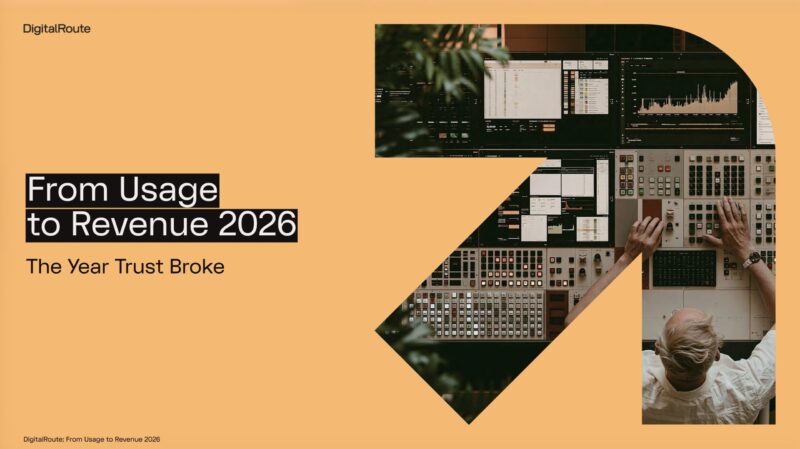
DigitalRoute Research:
From Usage to Revenue 2026
Usage pricing has gone mainstream — 49% are already live. But can the systems beneath capture, bill and defend it?
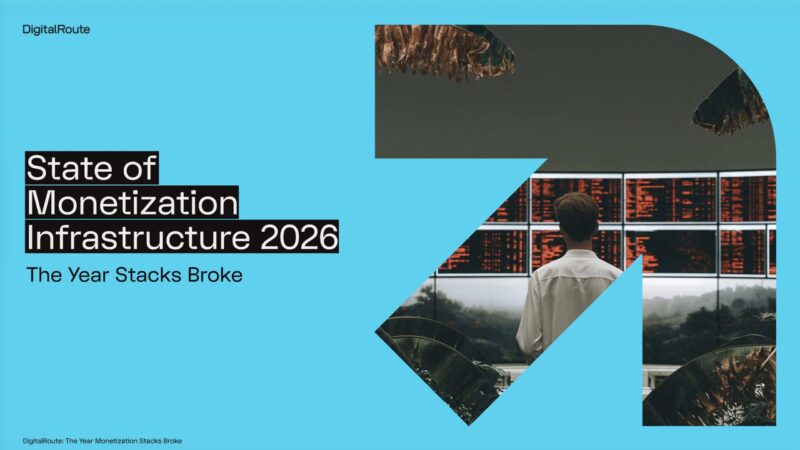
DigitalRoute Research:
State of Monetization Infrastructure 2026
AI services are exposing legacy monetization stacks. Usage-native doesn’t mean future-ready.

DigitalRoute Research:
The Year Customers Audited the Invoice
56% are confident their invoices are accurate. Only 22% can produce the evidence within 24 hours. Confidence has become a lagging indicator.
Frequently asked questions
About the report
A clear look at what the research covers, who it is for, and why AI monetization is becoming harder to manage in 2026.
DigitalRoute’s annual research report on how organizations monetize AI. The 2026 edition draws on a quantitative survey of 600+ executive leaders across six markets and examines pricing fragmentation, cost-to-serve confidence, forecasting accuracy, billing complexity, governance shifts, and what breaks first when AI usage scales.
In 2025, AI monetization became strategically inevitable. In 2026, it became commercially difficult. AI made every prompt a commercial event and pricing changed more in twelve months than in the previous twelve years. No model has crossed a 25% market share — bundling leads at 25%, 23% are still experimental, 18% use paid add-ons, 15% use API charging, 12% use outcome-based pricing.
Yes. The report is open access. No email, no form, no gating. Download the PDF directly from this page.
CFOs, RevOps, product, and engineering leaders running AI as a revenue line. The report covers margin protection, forecast confidence, cost-to-serve, pricing model selection, billing complexity, and what breaks first when AI scales — with findings useful to finance, revenue operations, product, and platform teams.
Margin protection is now the leading driver of AI commercial strategy at 35%. Only 8% of leaders are extremely confident in their true AI cost-to-serve. 47% name forecasting as the biggest near-term challenge. 57% say billing complexity has increased while only 7% say it has decreased. 67% of decision rights sit with finance or engineering rather than product. Only 9% believe nothing needs to change before they scale.
Quantitative survey of 631 executive leaders across six markets — UK (117), US (104), Germany (105), France (101), Nordics (103), and Benelux (101) — conducted April–May 2026. The respondent base is balanced across finance, product/platform, and engineering roles. Methodology is published with the report.

Read the full research report
Explore the commercial and operational shifts shaping AI monetization in 2026,
based on insights from 600+ executive leaders across six markets.
STATE-OF-AI-MONETIZATION-2026
PDF · ~52 pages · Open access
Updated 02 June 2026 · Cite as: DigitalRoute, 2026.